
In the spirit of Anton Došen, we encourage exchange among professionals working in the mental health field for persons with intellectual disability (ID) and offer support in countries and sectors where the approach or the philosophy of Anton Došen is less well-known. In this light, we organise study visits and further training for professionals from countries where healthcare for this vulnerable group still has significant room for improvement is fitting. Our first initiative is focused on Croatia, the birthplace of Professor Došen. Implementation was made possible with funding from PAOS-fonds.
1. Study visit for a multidisciplinary group of 8 professionals (April 2025)
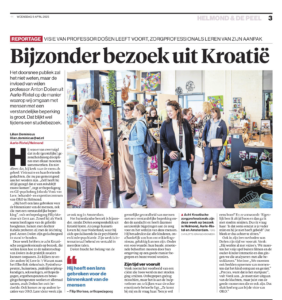
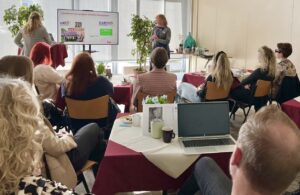
A multidisciplinary group of eight professionals from four organisations from Croatia, consisting of psychiatrists, psychologists, educational specialists and a nurse were hosted by several organisations in The Netherlands and among colleagues familiar with the developmental-dynamic approach to emotional development. In order to effectively implement required adjustments and new working methods at the organisational level, the management layer was represented in the group too.
The group was hosted by Lore/ORO in Helmond, Cordaan Amsterdam and Ons Tweede Thuis/Vrije Universiteit Amsterdam. In addition, the visitors met and spoke with colleagues from the Dutch Centre for Consultation and Expertise and from various institutions in Flanders (Belgium). Flanders is known for its Emotional Development Network, which gave colleagues the opportunity to exchange insights on how to set up a multidisciplinary network of professionals on mental health care for persons with ID.
Upon return to Croatia, colleagues made action plans on how to implement their new insights into practice and discussed them with our Board in an online coaching session.
2. Online training (March 2026)
In the second part of the project, a multidisciplinary group of 28 assessors from three organisations from Zagreb (Croatia), licensed to work with the SER-R2 and SED-S scales, were trained on the practical translation of assessment results to specific cases.
3. Online supervision sessions (May, June 2026)
Participants who followed the online training in March, are given the opportunity to present specific cases for supervision by expert colleagues from The Netherlands and Flanders.